
The Reckoning
Drown. Break. Become.

I know I’ve been posting a lot lately—sorry if it’s too much. But goddamn it, I’m a writer, and if I don’t write, I die. This is how I breathe. This is how I survive.
Recently, I was hired to write a screenplay. It’s one of those deep, existential stories where every line drips with meaning, where characters wrestle with the weight of their own existence, where silence says more than words. The kind of script that makes actors furrow their brows and nod sagely while sipping oat milk lattes.
And writing this very philosophical work has made me think—a dangerous pastime, I know. It’s made me think about cycles. About patterns. About the loops we all get stuck in.
Because if I’m being honest (and I might as well be, since honesty is the only currency that holds value in a life already spent), I live in a loop.
It’s the same story, different setting. The same wounds, different bandages. The same ghosts, different names. I have, on more than one occasion, found myself standing in the wreckage of a decision I swore I’d never make again, staring at it like it’s a stranger's disaster and not my own.
And this—this self-awareness—is both a blessing and a curse. Because knowing you’re in a loop doesn’t necessarily mean you know how to get out of it.
It just means you have front-row seats to your own downfall.
I am, at any given moment, both the warmest embrace and the sharpest blade. I don’t say that with pride or shame—it just is. I shift seamlessly between kindness and wrath, between the kind of love that could level mountains and the kind of detachment that makes deserts look lush. It’s not a choice. It’s the weather system I was born with.
I love deeply. Obsessively, even. When I care, I do it with the full weight of my existence, with an almost reckless devotion. My loyalty is unmatched—not because I want credit for it, but because it’s simply who I am. If I call you mine, then I will fight for you, build for you, burn for you. I will hold your hand through every ugly moment and protect your name like it’s a sacred thing.
But there is another side. A colder one. The part of me that can vanish without a trace when the energy shifts, when I sense betrayal, or when I simply realize that staying means suffocating. People have mistaken my silence for weakness, not realizing it is the exact opposite. My absence is my final act of war.
I have spent years making peace with this duality, learning not to see it as a flaw, but as a balance. The world, after all, is built on opposites—light and shadow, creation and destruction, sweetness and ferocity.
I have to believe I’m on this path for a reason. That there’s some grand design at play, some lesson buried beneath the wreckage of every mistake, every heartbreak, every moment where I looked at my own reflection and thought, Again? We’re doing this again?
Because otherwise, what’s the point? If there’s no lesson, then all of this—the cycles, the contradictions, the endless dance between who I am and who I’m trying to be—is just chaos for the sake of chaos. And that? That’s a reality I refuse to accept.
So I tell myself that I’m here to learn. Maybe it’s patience. Maybe it’s surrender. Maybe it’s how to break free from patterns that feel etched into my bones. Or maybe the lesson is simpler: Maybe I’m just meant to understand that life is not about arriving, but about moving. That I am not a problem to be solved, but a story still unfolding.
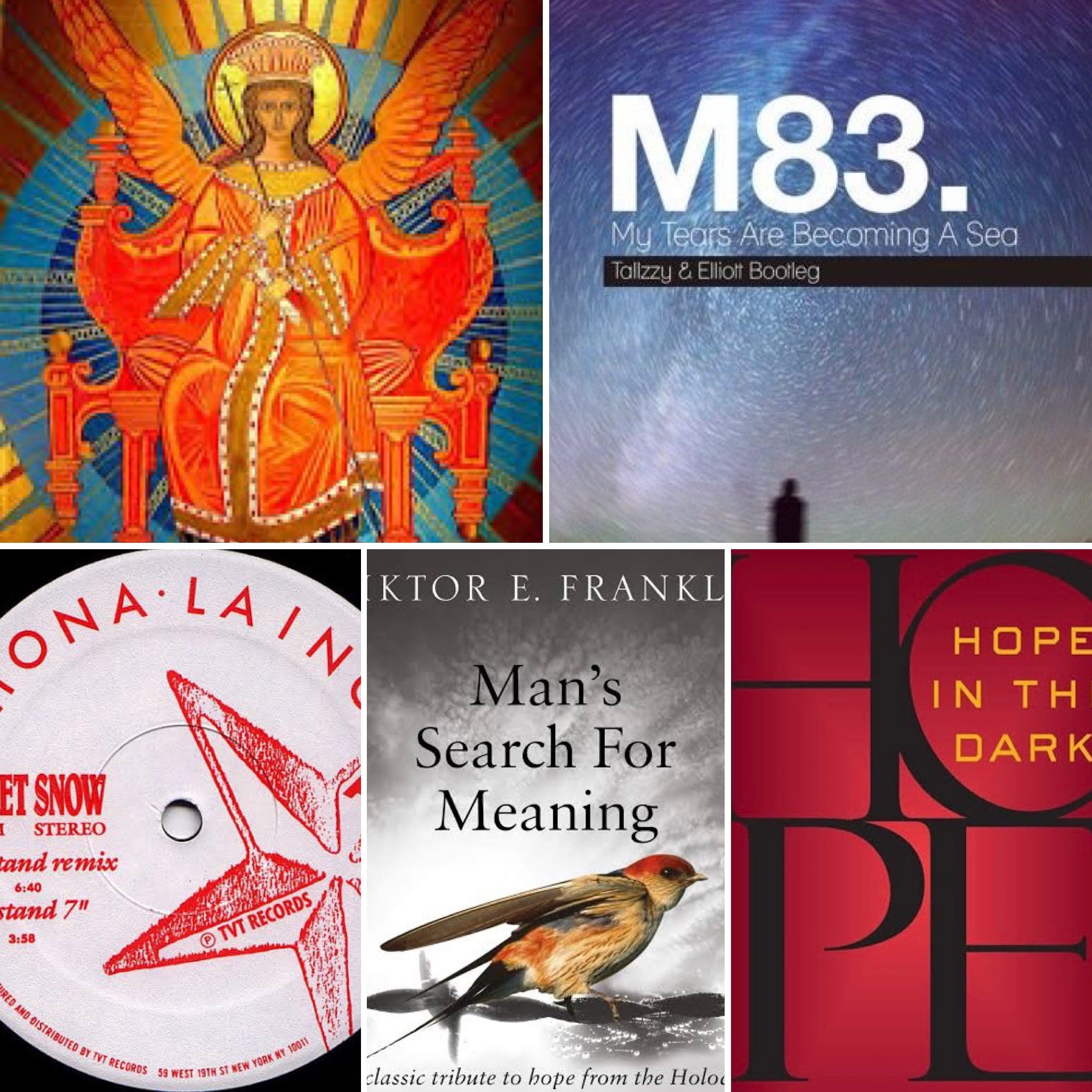
Rebecca Solnit writes in Hope in the Dark that “hope is an embrace of the unknown.” That it isn’t about knowing how the story ends, but about believing in the possibility of something different, something better. That real transformation happens in the dark—before the victory, before the resolution, before we even know if things will turn out alright.
I think about that a lot. About how maybe this path I’m on—this constant reckoning with myself, this cycle of tearing down and rebuilding—isn’t a punishment, but an evolution. Maybe the breaking isn’t a failure. Maybe it’s just how I expand.
Solnit talks about how history, and by extension our lives, don’t move in a straight line. That progress—whether personal or collective—is messy, full of false starts, backslides, and moments where everything feels like it's crumbling. But she also reminds us that just because we can’t see the light yet doesn’t mean it’s not there.
And so, I walk. Not because I know where this road leads, but because standing still is not an option. I walk because maybe the act of moving forward—step by uncertain step—is the lesson itself. Maybe enlightenment isn’t a destination. Maybe it’s the willingness to keep going, to keep learning, to keep believing that even in the dark, there is still hope.
Viktor Frankl wrote Man’s Search for Meaning in the aftermath of surviving the Holocaust. He didn’t write it from a place of theory or abstraction—he wrote it from the depths of human suffering, from inside the concentration camps where everything that made life worth living was systematically stripped away. And yet, he found meaning in the chaos.
Frankl argued that life is not about avoiding suffering—it’s about finding purpose within it. That even in the most unimaginable circumstances, we still have the power to choose how we respond. He refused to believe in fate as some predetermined script. He believed that meaning is something we carve out for ourselves, moment by moment, choice by choice.
And that’s the thing, isn’t it? There is no fate but what we make. Yet, the world is loud. People love to tell us who we are, what we should be, what paths are acceptable.
Outside voices are the enemy. They cloud our judgment, blind us to our true selves, and rewrite our narratives before we even grasp the pen. Steve Jobs once cautioned, "Don't let the noise of others' opinions drown out your own inner voice." These external clamorings can lead us astray, making us doubt our instincts and conform to paths not meant for us. But the only voice that truly matters is our own—the one that knows our deepest desires, our authentic purpose. To reclaim our destiny, we must silence the external noise and trust that inner voice, guiding us toward the life we are meant to live.
But just because someone stumbles and loses their way doesn’t mean they’re lost forever. Redemption is real. Reinvention is possible. And meaning? Meaning isn’t waiting for us at some distant finish line. It’s in the steps we take, even the wrong ones. Even the ones that make us question if we’re ever going to get it right.
Look, I don’t want to sound like one of those corny Instagram posts about growth and becoming your best self. You know the ones—some stock image of a misty mountain range with a caption like "Heal. Evolve. Let go."
My ex used to send me those. Relentlessly. As Instagram messages. Every morning, my inbox would light up with another bite-sized dose of wisdom, hand-delivered with love. She really believed in them, in the power of words to shape reality, in the idea that if you just reminded yourself enough times to trust the process, you actually might.
And I loved that about her.
But I also found it funny—endearing funny, not mocking funny—how she never quite practiced what she preached. She’d send me something about surrendering to the universe and then spend the next three hours overthinking a text. She’d send me a quote about inner peace while pacing the room, too anxious to sit still. And I would just watch her, smiling, wondering if she ever realized that she was already everything those messages told her to be. That she didn’t need a carefully curated square of text to remind her how much light she carried—she was the light.
But some mornings, you just wake up a little more introspective than others. Some mornings, something sneaks in before the usual noise, before the emails, before the weight of the day settles onto your shoulders. Today was one of those mornings.
Because today, I woke up with a song in my head. No idea how. It was just there. Like some ghost from a past life had left it behind, waiting for me to pick up the thread.
It wasn’t some overplayed Top 40 hit either—because, let’s be real, I’m not exactly a "listen to whatever’s on the radio" kind of guy. No, the song was Soviet Snow by Shona Laing. An obscure masterpiece: atmospheric, haunting, and deeply reflective. Laing, a New Zealand singer-songwriter, never really peaked or became famous, but her lyrics encapsulate the dread of invisible threats and the fragility of humanity in the face of uncontrollable forces.
The melody looped in my mind before I was even fully awake. And then the lyrics followed:
"We need something to keep the chill / From freezing our own free will / We’re teasing at war like children / Love is the one solution.”
And damn if that didn’t hit me right in the nuts.
Because isn’t that exactly what we do? We live with one eye on the winter, always bracing for the cold. We build walls. We stockpile our defenses. We prepare for wars—some real, some imagined. And in the process, we let the chill seep in. We freeze our own free will, convince ourselves that survival is more important than connection, that self-preservation is more valuable than vulnerability.
But deep down, we know. We know that love is the one solution. That seeing ourselves inside our so-called enemies is the only way forward. That the same winter wind that blows through their homes blows through ours too.
And maybe that’s why this song showed up in my head today—like a quiet little reminder that even in the coldest seasons, we have a choice.
We can brace against the winter, or we can find a way to keep the warmth alive.
When my father died, I thought that was the hardest thing I’d ever go through. The grief was a living thing, heavy and relentless, wrapping itself around my body and squeezing until I couldn’t breathe. I thought nothing could ever break me like that again.
I was wrong.
Because this—this—watching my son fight his own demons, watching him struggle against something I can’t physically pull him from, is the hardest thing I have ever done.
There is no manual for this. No roadmap for watching your child walk the same roads you once did, knowing exactly where they lead but being powerless to stop them. No one tells you how to stay strong when your love isn’t enough to fix things. No one prepares you for the nights when you sit in the dark, replaying every moment of their childhood, searching for the exact second you lost them.
I would take his pain if I could. I would rip it out of him and take it into myself without a second thought. I would carry his burdens, fight his battles, absorb every ounce of suffering so he never has to feel it. But that’s not how this works.
Instead, I am here. Sitting in waiting rooms, taking deep breaths before every phone call, bracing myself for news I can’t control. Instead, I am learning what it means to love someone enough to let them save themselves.
And that? That is the hardest thing I have ever done.
As part of my research for the movie I’m writing, the producers handed me a book to read—The Sophia of Jesus Christ. Not exactly a light weekend read. This isn’t the kind of book you casually flip through while half-watching Netflix. No, you need to come at this one with your smart glasses on, fully caffeinated, and preferably with a notebook nearby because, damn, does it make you think.
It’s an ancient Gnostic text, meaning it’s less fire and brimstone and more what even is reality and how do we escape it? It’s dense, poetic, and packed with the kind of wisdom that makes you stop mid-sentence just to sit with it for a second. It’s all about knowledge, self-awareness, and breaking out of the illusion we call life—big, existential, who-are-we-really type of stuff.
And the thing is, once you strip away the mystical phrasing and the centuries-old language, the message hits hard: We spend so much time looking outward for answers when the truth has been inside us the whole time. We search for meaning in all the wrong places—power, success, distraction—when real understanding comes from within.
It’s not an easy read, but neither is life. And like life, the lessons are there if you’re willing to do the work.
Three weeks.
Three weeks of sitting in this strange purgatory, trying to save my son, reading esoteric texts that bend my brain, and living through what I can only describe as my personal nightmare. And in the thick of it, in the sleepless nights and the gut-wrenching moments, I’ve started to see patterns. The universe—God, fate, whatever you want to call it—has been shoving lessons in front of me, daring me to pay attention.
The first is this: Everything that is not aligned is being ripped away.
Friendships, relationships, jobs, old habits—anything built on fear, ego, or survival mode is collapsing. Not as punishment. Not as some cosmic cruelty. But because I can’t take it with me to my next level.
And that’s the brutal part. We cling to things because they are familiar, because they’ve been part of our story for so long that we mistake them for permanent. But permanence is a lie. Everything temporary eventually shows its cards.
I have watched people fade from my life in real-time, connections unraveling like old thread, and I don’t even have the energy to chase them. Not because I don’t care, but because I finally understand: If something is meant to stay, it will. If it isn’t, no amount of gripping onto it will make it last.
The things that are falling away were built on old versions of me—versions that needed validation, that tolerated less than they deserved, that settled for comfort over growth. And now? Now, those things are burning.
I am watching the old world collapse. And maybe—just maybe—that’s exactly what’s supposed to happen.
The second one: I am facing the same lessons over and over.
The same patterns, the same heartbreak, the same moments where I swear I’ve been here before—because I have.
If you’re stuck in a loop, it’s not coincidence. It’s not bad luck. It’s not life being unfair. It’s the universe waiting for you to respond differently.
And I haven’t. Not really.
I have disguised my same old reactions in new words, new settings, new people. I have convinced myself I was choosing differently when all I was doing was dressing my wounds in slightly different bandages. But deep down, I knew. I knew I was still avoiding the real work, still letting fear dictate my choices, still choosing the familiar pain over the unknown freedom.
And here’s the thing about the universe—it doesn’t get bored. It doesn’t just let you move on because you’re tired. It will sit patiently, forever if needed, running the same damn script until you finally get the message.
So now, I have two options: I can keep playing this game, keep walking these same roads, keep pretending I don’t already know how this ends.
Or—I can finally choose differently.
And the moment I do, the cycle breaks.
Lesson three: The Void
I feel completely lost. Like nothing makes sense anymore. Like I’ve been dropped into a place where the roads don’t connect, the signs are written in a language I don’t understand, and every direction feels equally wrong.
And that’s because the old version of me is dissolving.
That version—the one who survived on instinct, who made decisions out of fear, who clung to things long after they’d expired—is fading. And what comes next? That’s the part I don’t know yet. Because clarity doesn’t come before the leap. It comes after.
Right now, I am in the void. That terrifying, in-between space where I am no longer who I was, but not yet who I am becoming. And the void doesn’t offer comfort. It doesn’t give you certainty. It doesn’t whisper assurances in your ear. It simply asks you to let go—to trust that even though you can’t see the ground beneath you, it will be there when you land.
I tried to explain this once—to her. I wanted her to understand that feeling lost isn’t failure, that confusion isn’t a sign to turn back, that sometimes being completely undone is the only way to become something new.
But my words fell on deaf ears. She was always looking for solid ground, and I—well, I’ve always been somewhere between falling and flying.
I hope she thinks about that now. I hope she remembers. I hope she knows that just because someone is lost doesn’t mean they won’t find the way.
Lesson 4—and this one is the hardest, folks. We screenwriters call it “The Dark Night of the Soul.” Others call it the breaking point.
My patience, my faith, and my trust are being pushed to the absolute limit.
Delays. Obstacles. Uncertainty. The constant feeling of moving forward only to get knocked back down. The exhaustion of waking up every day and still not having answers, still not knowing if all this effort, all this fighting, is actually leading anywhere.
This—this—is where most people quit. This is the breaking point. The place where doubt creeps in, where the mind starts whispering, Maybe this isn’t meant for you. Maybe you should just stop.
And they do. They turn back. They convince themselves that comfort is better than uncertainty, that staying small is safer than the risk of becoming something greater. They stop before the shift, before the breakthrough, before the moment that could have changed everything. Because the unknown is terrifying, and surrendering to it feels like death.
But maybe that’s the point. Maybe you have to lose everything before you’re free to do anything. “It’s only after we’ve lost everything that we’re free to do anything.” Chuck Palahniuk wrote that, and he was right. This moment—the collapse, the unraveling, the sheer devastation of what you thought you knew—is not the end. It’s the invitation.
Most people don’t take it. Most people break.
And God, have I wanted to stop.
Because the truth is, I am tired. Tired of waiting. Tired of setbacks. Tired of the universe throwing test after test at me like it’s trying to see just how much I can take before I break.
But here’s what I know—this is where the shift happens. Right here. Not when things are easy. Not when the road is clear. But in this exact moment, when everything feels impossible, when nothing makes sense, when every instinct is telling me to turn back.
Because once you stop resisting, the path clears.
That’s the trick. Not forcing. Not gripping so tightly onto control that your own desperation becomes the barrier. The moment you surrender—not to failure, but to flow—everything starts to move.
So I am standing here, right at the edge of the unknown, bloodied, bruised, but still upright. And I am not quitting.
Not now. Not ever.
The final lesson: The Unknown
I am being forced to trust the unknown.
No roadmap. No guarantees. No safety net. Just a deep, internal knowing that something bigger is coming—even if I can’t see it, even if I don’t know when or how, even if everything in me is screaming to turn back.
This is the moment that makes or breaks people. And after 51 years in this world, I can tell you—most people break.
I’ve seen it. I’ve watched people collapse under the weight of uncertainty, choosing comfort over growth, familiarity over freedom. I’ve seen them shrink, settle, convince themselves that this is enough because the fear of what comes next is greater than the pain of staying the same.
And now, it’s my turn. My moment. My test.
Will I trust, or will I retreat?
I want to say I know the answer. That I am fearless, that I will step forward without hesitation, that I am built for this. But the truth? The truth is, I am scared. I am exhausted. I am standing at the edge of something massive, something irreversible, and part of me wants to run.
But then I remember—every great thing that has ever happened in my life came after a leap. After a risk. After a moment of sheer terror where I had to decide: Do I trust the unknown, or do I let it swallow me whole?
And maybe that’s the real lesson. That the people who make it through—the ones who don’t break—aren’t the ones without fear. They’re the ones who step forward despite it.
Right now, My Tears Are Becoming the Sea by M83 is blasting through my headphones. And if you’ve ever heard it, you know—it’s not just a song. It’s a reckoning. A tidal wave of sound that crashes into you, swallows you whole, drags you under, holds you there until you stop fighting. And just when you think you’ll never breathe again—just when you’ve surrendered completely—it spits you back out into something bigger. Something infinite.
Maybe that’s what this is.
Maybe that’s what all of this is.
The storm. The drowning. The surrender. The unknown.
And then—if I trust, if I don’t break, if I tame my fears—
The light.
Because that’s the only way through, isn’t it? You don’t get to skip the suffering. You don’t get to fast-forward past the pain, past the unraveling, past the long nights where you sit in the dark and wonder if you’ll ever feel whole again.
You drown before you rise.
You break before you become.
You lose yourself before you find the truth.
So go. Go listen to Soviet Snow. Let it haunt you, let it wake something up inside of you that you didn’t even know was asleep.
Go read The Sophia of Jesus Christ. Let it wreck your perception of reality, let it force you to question everything you thought you knew.
Go read Solnit. Hope in the Dark. Let it remind you that even when the night is endless, even when you’ve lost sight of the shore, even when you’re convinced you’re too far gone—there is still light.
I’m not writing this for pity. I don’t need reassurance, I don’t need anyone to tell me I’ll be fine. I am not asking for help.
This is not about anyone else.
This is me, understanding—finally.
Understanding that the pain isn’t here to punish me. It’s here to strip away everything that can’t come with me to whatever comes next. That the suffering, the waiting, the wreckage—it’s all part of the breaking, the becoming, the ascent.
"I’m slowly drifting to you…"
That line from My Tears Are Becoming the Sea petrifies me. It feels like a transmission from somewhere deep inside myself, a reminder that even when I feel lost, I’m still moving. That something—someone—is calling me forward.
"The stars and the planets are calling me…"
That’s the lesson, isn’t it? That even in the silence, even in the unknown, even when it feels like everything is fading—I am still on my way.
"A billion years away from you, I’m on my way."
Like I already said: I have no map for this. No guarantee of what’s waiting on the other side. I don’t know if I make it out of this whole, or if I leave pieces of myself buried along the way.
But I do know this—
I am not turning back.
I am stepping forward.
I am choosing to trust.
I am taking the leap.
And somewhere, just beyond the wreckage—
A new beginning waits.